How to Choose the Right Product
How to Choose the Right Product
Start with what the joint needs to do. An oven housing needs a seal that tolerates heat, a sunroom perimeter needs a flexible weatherseal, and a structural glazing joint may carry wind loads. Use this guide to narrow the ZORVELQA™ range by application and identify what to verify before specifying a sealant.
Match the sealant to the job
- Heat-exposed jointsZORVELQA™ 120 for heat evaluation
ZV-268 for appliance assemblies - Fire-performance requirementsZV-238 for material testing
Listed assembly for rated openings - Structural glazingZV-999 for project review
- Exterior perimeter jointsZV-666 for weathersealing
ZV-333 for general nonstructural joints - Kitchen and bathroom jointsZV-218 sanitary profile
- Float glass and selected ceramicsZV-668 for non-immersed joints
The catalog presents ZORVELQA™ 120 for application review and the ZV-series products as proposed OEM profiles. Confirm the final formula, availability and supporting data before specification.
Fireplaces, flues and ovens
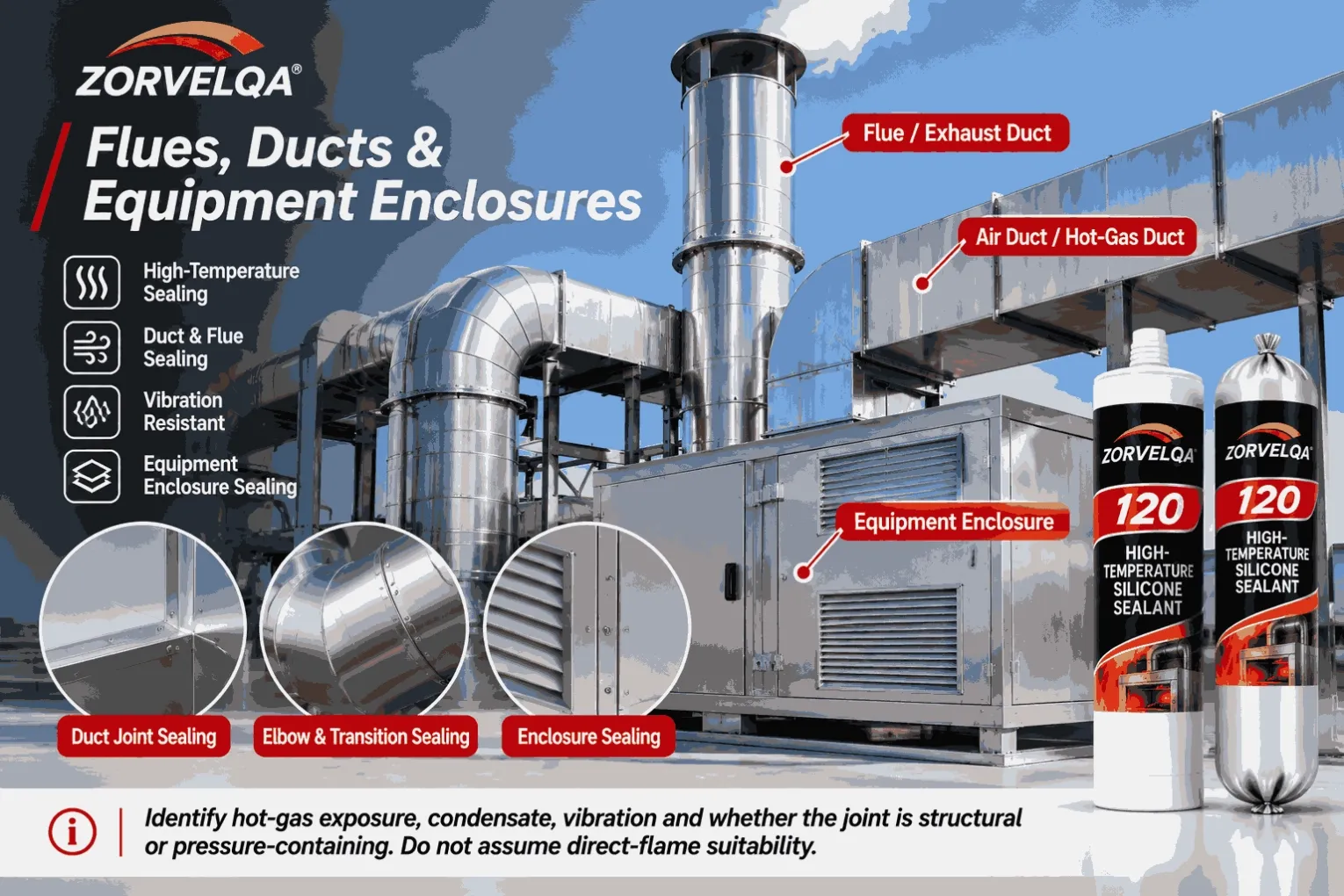
Measure or obtain the temperature at the joint itself. Record the normal operating temperature, the highest peak and its duration, and how often the joint heats and cools. Where the equipment manufacturer permits a heat-resistant silicone, evaluate ZORVELQA™ 120 for heat-exposed housings, covers and joints. Consider ZV-268 for appliance assemblies and housings after checking the service temperature and substrate compatibility.
For fireboxes, flue connections and oven cavities, follow the appliance or vent manufacturer’s instructions for the specific sealant or gasket, especially where it will see flame or hot exhaust. If the joint can contact food, verify compliance for that use separately.
Doors and windows with fire requirements
First identify whether the specification calls for flame-retardant performance of the material or a fire rating for the opening. The evidence required is different for each.
Curtain walls and structural glazing
In structural silicone glazing, the bond transfers loads such as wind pressure from the glass or panel to the supporting frame. ZV-999 is the catalog candidate for this role. Before approval, have the façade engineer review design loads and joint geometry, and verify adhesion and compatibility with the actual glass, frame finishes, gaskets and other contact materials.
The same façade can also have separate weatherseal joints that limit rain entry and accommodate movement. Identify the function of each joint on the drawing before assigning a sealant.
Sunrooms, skylights and exterior frames
For nonstructural exterior joints exposed to rain, UV and daily temperature swings, look for a compatible neutral-cure weathersealing silicone. ZV-666 is the catalog weathersealing profile for exterior joints, windows, doors and skylights. Confirm its cure chemistry, movement rating and adhesion to the actual materials, such as coated aluminum, glass or polycarbonate.
For general nonstructural window and door joints, review ZV-333, the catalog’s neutral silicone profile. Check the exposure at the joint to decide whether a dedicated weatherseal is needed.
Bathrooms, showers and kitchens
For shower trays, tubs, sinks and tile-to-fixture joints, choose a compatible sanitary silicone. A neutral-cure sanitary grade is a good starting point for mixed materials such as glazed tile, acrylic and coated fittings. For frequently damp joints, ask for documented mold resistance.
ZV-218 is the proposed kitchen and bathroom profile. Confirm the final formula’s cure chemistry, mold-resistance data, adhesion to the actual surfaces and time before water exposure.
Glass bonding and aquarium construction
ZV-668 is the proposed acetoxy (acetic-cure) silicone for float glass and selected ceramics in non-immersed applications. Many acetoxy glass grades offer a fast initial cure. Check the skin-over time for your tooling window and the cure-depth data before putting the joint into service. Through-cure depends on the formula, bead thickness, temperature and humidity.
For a fish tank, specify an aquarium sealant documented for tank bonding, continuous immersion and contact with aquatic life after cure. Follow the tank design and the sealant maker’s full-cure instructions before filling.